

When a Semi Starts to Tip
Rollover calls don’t come in evenly across conditions. The ones that follow a rainstorm, a dense traffic cluster, or a stretch of highway under construction tell a consistent story. I-95 semi towing responses after rollovers almost always reveal that two or three things were off at once, not one catastrophic failure. Understanding which conditions combine to create that situation, and what a driver can do to interrupt it, is more useful than treating a rollover as something that simply happened.
The Conditions That Change the Math
A loaded semi has a precise margin of stability on a curve. That margin shrinks in certain conditions without the driver feeling it until it’s already gone. Road surface, traffic density, and entry speed are the three variables that interact fastest.
Wet Pavement and What It Does to Lateral Grip
A tractor-trailer relies on lateral friction to hold its line through a curve. On wet pavement, the available grip drops by 30 to 40 percent relative to dry conditions, which means a speed that felt comfortable through that ramp last week may be beyond the tipping threshold today. The grip loss affects stopping distance and also the lateral force available to keep the trailer tracking through a curve. Drivers who run familiar routes often skip adjusting their ramp speed in wet conditions because the route felt fine the last fifty times they took it dry.
Speed Differential in Dense Traffic
I-95 carries a mix of passenger vehicles and commercial trucks running at different speeds, and the gaps between them close without much warning. A truck traveling at highway speed that encounters a sudden slowdown has limited options: gradual braking over a long distance, or a harder input that shifts trailer weight forward and to one side. Sharp braking on a trailer with a high or uneven load transfers weight in ways that can begin a lean. Lane changes made quickly to avoid traffic carry the same risk, as a fast lateral move at speed puts the trailer’s momentum in conflict with the direction of the tow vehicle.
What the Pre-Trip Should Be Catching
A rollover that follows worn suspension components, under-inflated tires, or a load that wasn’t secured isn’t a random event. A truck with worn shock absorbers allows more trailer sway per lateral input than a well-maintained one. Under-inflated tires on one side of a drive axle create an uneven contact patch that pulls the trailer in that direction under load shift or braking.
A thorough pre-trip covers tire pressure, tread depth, load securement, brake function, and suspension condition and takes fifteen to twenty minutes. Many I-95 semi towing calls that follow a rollover involve a vehicle that hadn’t had a complete pre-trip in some time, and the inspection would have caught at least one contributing factor.
Speed Management on a High-Volume Corridor
Across commercial vehicle rollovers, entry speed is the most consistent variable, more than curve geometry or load configuration in isolation. A driver managing speed for the corridor they’re actually on, not just the posted limit, has a longer recovery window in every scenario. On I-95, where traffic conditions change faster than on open stretches, that means:
- Slowing down before the curve or ramp, not after entering it
- Adjusting speed downward in rain before reaching the curve, not during it
- Building a following distance that allows gradual responses to traffic changes
- Knowing the load well enough to anticipate how it behaves on lateral inputs
- Treating early sway as a signal to ease off the accelerator, not to steer against it
Speed management is what gives a driver time to use the short window between feeling unstable and passing the point of correction.
Universal Towing Handles I-95 Semi Towing When the Rig Goes Over
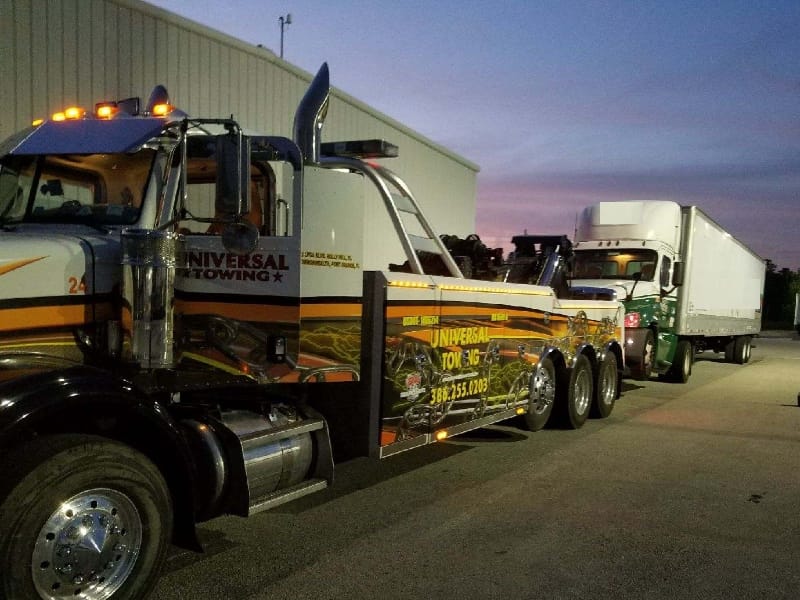
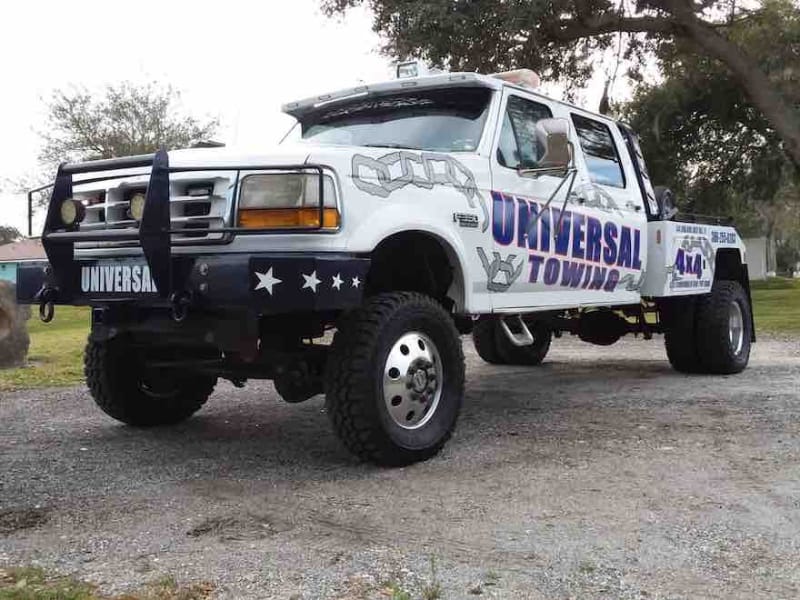
Universal Towing provides I-95 semi towing for rollover recovery, highway breakdowns, and large-scale incidents throughout this corridor. When a tractor-trailer goes over on I-95, the response requires heavy rotators, rigging, and a crew that knows how to manage a highway shutdown while the recovery is underway. Every I-95 semi towing recovery starts with a scene assessment before any equipment touches the truck.
Universal Towing treats every I-95 semi towing call with the same approach regardless of the hour or complexity of the scene. Our I-95 semi towing response is built around getting the rig off the road. And then the highway moving again, as fast as that can safely happen. When the truck is down, call us.
FAQ
Does wet pavement significantly increase rollover risk for semi trucks?
Yes, more than many drivers account for. The lateral friction available to keep a trailer on its line through a curve drops substantially on wet pavement, and the effect is multiplied on curves and ramps. Most posted advisory speeds on ramps are calculated for dry conditions in a passenger vehicle. For a loaded semi on a wet ramp, the actual safe speed can be meaningfully lower than the sign suggests, and the change in grip isn’t always something a driver feels until the trailer starts to move.
How does load securement affect rollover risk during a trip?
Cargo that isn’t secured properly can shift during braking, acceleration, or lane changes, and a load shift changes the trailer’s center of gravity mid-trip without warning. A load that was balanced at the start of the run may become unbalanced after a hard stop or a tight curve. Flatbed loads are particularly vulnerable to shift if straps have loosened over miles of travel, and drivers should check securement during fuel stops on long hauls.
What do worn shock absorbers actually do to a semi’s handling?
Shock absorbers dampen the trailer’s response to lateral inputs and road irregularities. When they wear out, the trailer reacts more dramatically to the same inputs — a lane change or a ramp that would have produced a manageable lean on a well-maintained truck produces a larger, faster lean on one with degraded shocks. The driver may not notice the difference until the response is already beyond what steering can correct.
At what point in a developing sway can a driver still recover?
Early in the sway cycle, reducing throttle and allowing the truck to slow gradually gives the trailer time to settle. The window for effective recovery closes fast — typically within one or two oscillations, depending on speed and load. Steering against the sway or applying hard brakes accelerates the cycle rather than dampening it. Experienced drivers recognize the early feel of sway, which is more subtle than the visible lean that comes later, and respond to that early signal.
How does following distance affect rollover risk?
More than most drivers think. A shorter following distance forces sharper braking inputs when traffic ahead slows, and sharper inputs create the weight transfer and potential lean that a longer following distance avoids entirely. On a high-volume interstate with mixed traffic, the difference between a three-second following distance and a seven-second one can be the difference between a gradual stop and a hard braking event that initiates a sway.
How long does a highway typically stay closed after a semi rollover?
It depends heavily on the cargo, the position of the rig, and how far off the road it went. A rollover on the shoulder with no spill can take four to six hours to clear. A rollover across travel lanes with cargo spread across the road can take eight to twelve hours or longer. Hazardous materials, fuel spills, or structural damage to the truck add significant time.