

Keep It Straight, Avoid the Fate
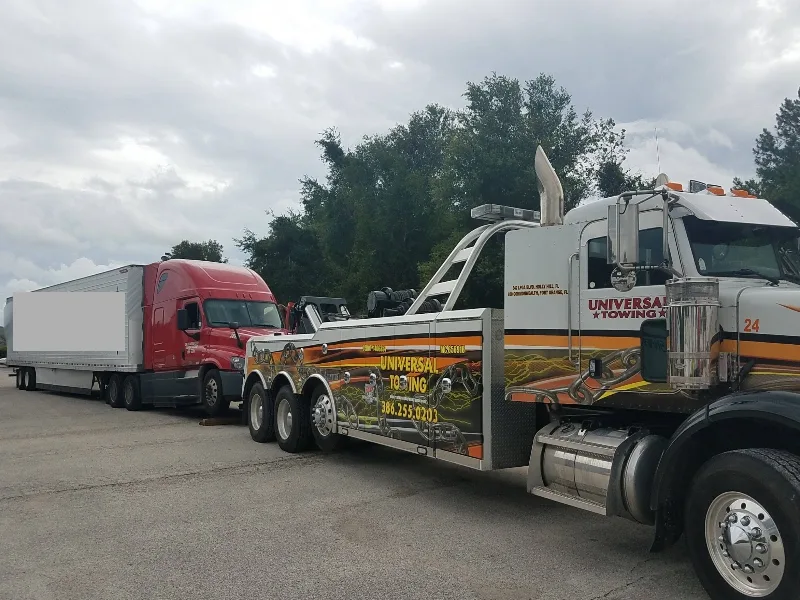
For us tow truck operators, the aftermath of a jackknife can be a common sight: a semi folded like a pocketknife across multiple lanes, traffic backed up for miles, and responders working to untangle the mess. Jackknifing happens when the trailer swings out of sync with the cab, usually forming a V-shape that can be nearly impossible to recover from in the moment. When that happens, we roll out for a I-4 semi towing job.
So, what actually causes it?
At its core, jackknifing is a loss of traction. Slippery roads, sudden braking, high speeds, or improperly loaded cargo can throw off the balance between a truck and its trailer. When the drive wheels lock up or spin freely, the trailer gains enough momentum to swing. From there, gravity and momentum take over.
Another big factor? Inexperience. Quick reactions, like slamming the brakes on an icy curve, are understandable but often make things worse. It doesn’t take much to send thousands of pounds of cargo into an uncontrolled slide.
Practical Ways to Prevent Jackknifing
Jackknifing isn’t just bad luck. It’s something you can usually prevent with a few solid habits and checks. Here’s what we recommend every driver practice.
Keep Brakes Balanced
Uneven brake pressure is one of the fastest ways to lose control. Drivers should regularly inspect their brake pads, air systems, and valves to ensure everything’s working evenly between the tractor and trailer. Brake maintenance matters; not just for performance, but for safety.
Slow Down Before the Curve
Speed has a way of creeping up, especially on downgrades or wet pavement. You should reduce your speed well before you enter a curve or ramp. Downshift early. Brake gradually. That’s how you keep everything lined up and stable.
Load It Right
Weight distribution plays a huge role. Too much weight in the rear makes the trailer more likely to swing forward under hard braking. Be sure your load is balanced front to back and secured properly. Skipping this step increases your risk of a jackknife, plain and simple.
Use the Engine Brake Wisely
Engine brakes help control speed, but overusing them, especially in slick conditions, can cause drive axles to lock. Ease up on the jake and match it with light service braking to keep your rig stable on wet or icy roads.
Increase Following Distance
Tailgating cuts down your reaction time. Give yourself extra space to stop or maneuver. A bigger buffer means less chance you’ll have to slam the brakes and risk losing control of the trailer.
Signs Jackknifing Might Be Imminent
You can usually feel a jackknife coming before it fully happens. Watch for these warning signs:
- Trailer begins to drift during braking
- Rear wheels lock up on slippery roads
- Trailer shifts hard during a downshift
- Steering becomes unusually light or twitchy
If any of these show up, stay calm and make smooth, gentle corrections. Panicking or jerking the wheel only speeds up the problem.
What to Do If a Jackknife Starts
If you feel a jackknife beginning, resist the urge to hit the brakes harder. That’s the most common mistake. Instead:
- Let off the throttle gradually.
- Steer into the skid to realign your trailer with the cab.
- Make no sudden inputs, keep everything as smooth as possible.
- Use the trailer brake independently, if your truck is equipped for it, to help correct the swing.
If it’s too late to stop the slide, don’t try to wrestle control. As soon as it’s safe to do so, that’s when it’s time to call for I-4 semi towing.
Universal Towing: Trusted I-4 Semi Towing When You Need It Most
At Universal Towing, we’ve seen how quickly jackknifing can turn a routine trip into a full-scale road hazard. That’s why our I-4 semi towing service is designed for speed, strength, and safety. We know how to recover jackknifed trucks, restore traffic flow, and keep everyone moving.
When you call us for I-4 semi towing, here’s what you get:
- 24/7 coverage along key I-4 routes
- Equipment ready for heavy-duty semi recovery
- Operators trained for jackknifed, overturned, and downed rigs
- Honest, clear updates from dispatch through recovery
If you drive this corridor and end up needing help, know this: we’re already prepared. Universal Towing is your go-to partner for I-4 semi towing. Because our I-4 semi towing team is always just a call away.
FAQ
What does it mean when a semi truck jackknifes?
It means the trailer swings out at an angle to the cab, usually forming a V shape. This can block traffic and is often caused by a loss of traction or sudden braking.
Is jackknifing always caused by bad weather?
No. While slick roads can increase the risk, jackknifing also happens from improper braking, poor weight distribution, or mechanical issues like brake imbalance.
Can trailer brakes prevent jackknifing?
Yes, using the trailer brake separately can help correct a trailer that starts to swing. It helps slow the trailer without locking up the drive wheels.
How do professional drivers avoid trailer swing?
They slow down early, balance their loads, increase following distance, and avoid sudden inputs. Routine maintenance also plays a big role.
What should you do if your trailer starts to slide?
Ease off the accelerator, steer in the direction of the skid, and avoid sudden braking. If equipped, use the trailer brake to regain control.
Does jackknifing always lead to a crash?
Not always. Some drivers regain control in time, but many jackknife incidents result in blocked roads or damage. Quick, calm responses are key.