

Rubber Gone, Wrecker On
A rig comes to a halt on I-95 just south of Ormond Beach with what the driver thinks is a simple tire problem. When we arrived, the blown drive tire is torn off a mudflap, ripped a section of air line loose, and pushed the fender into the wheel well. On calls like this, the tire is the start of the issue, not the end of it. And I-95 semi towing becomes the only real option.
A blown tire on a loaded semi does not always stop at the tire. Rubber strips can whip into wiring, air fittings, brake components, and suspension mounts. If the truck cannot hold air pressure or the brakes will not release properly, a roadside tire swap will not get the driver back on the road.
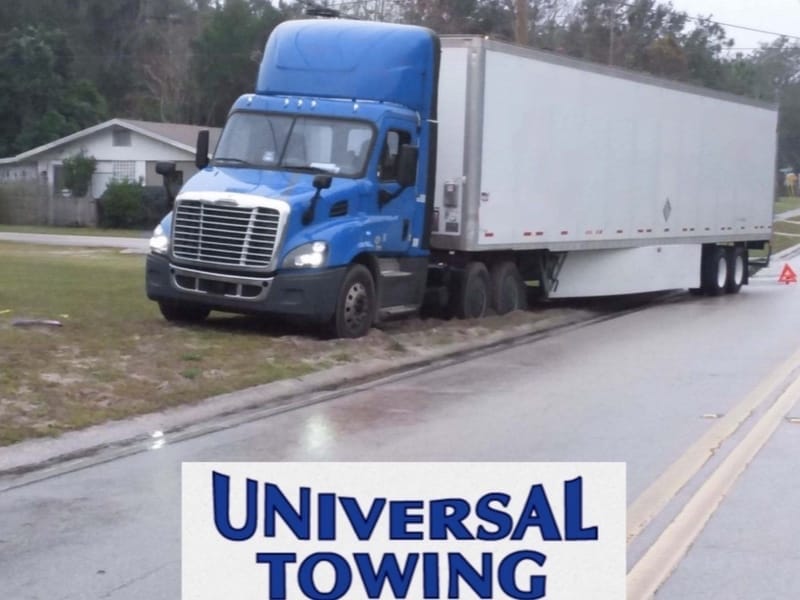
When the Damage Goes Beyond the Tire
A clean tire failure means the rubber came apart without hitting anything else. The rim stayed intact, the air system held pressure, and the truck can still move under its own power. Those calls usually end with a service tech, a spare tire, and thirty minutes of work.
The other kind of failure is messier. A shredded tire can tear into brake chambers, yank air lines from their fittings, or bend sheet metal into moving parts. We have seen steer tire blowouts crack plastic fender panels and drive tire failures rip fuel tank guards halfway off the frame. At that point, replacing the tire will not solve the underlying damage.
The Questions We Ask Before Moving Anything
After a tire blows, we start by checking air pressure and brake function. If the truck cannot build or hold air, the brakes may stay locked or release unevenly. A driver who tries to limp forward on damaged brakes risks locking a wheel, overheating a rim, or creating a fire hazard near the hub.
Before we decide how to move the vehicle, we need clear answers. Which axle failed? Is the trailer loaded or empty? Can the truck steer without grinding metal? How much shoulder space is available? Where does the fleet want the unit taken? Those details shape the entire I-95 semi towing setup.
We also check the road position. A truck sitting fully on a wide shoulder gives us room to work. A rig leaning into gravel near the fog line or sitting half in the lane near Port Orange creates a different set of problems. The tighter the space, the more careful the hookup has to be.
Cargo and Road Position Change the Plan
Cargo matters more than most drivers realize. A loaded reefer with perishable freight may need to keep moving even if the tractor is disabled. A sealed trailer with time-sensitive delivery may require a different response than an empty flatbed. Sometimes we move the tractor only and arrange a bobtail pickup. Sometimes the entire combination has to move together.
Road position shapes the urgency. A truck parked on a wide shoulder near Daytona Beach with no traffic behind it gives everyone time to assess the damage. A disabled rig sitting near a ramp or blocking part of the lane near Holly Hill forces a faster decision. On I-95 semi towing calls, the location can matter as much as the mechanical damage.
Why Air Loss Is a Bigger Problem Than It Sounds
Air loss does not always announce itself with a loud hiss. A slow leak from a cracked fitting or torn line can take minutes to drop the system below operating pressure. By the time the driver notices, the brakes may already be dragging or partially locked. Moving a truck in that condition can destroy a rim or lock a wheel completely.
What Makes a Tire Failure a Tow Instead of a Service Call
I-95 semi towing makes sense when the truck cannot move safely under its own power. That might mean a bent rim, a leaking air line, a locked brake, broken suspension, or damaged steering. A loaded trailer sitting partly in the lane makes the call more urgent because the truck has to leave the roadside without creating another hazard.
Those details guide the setup. I-95 semi towing may involve moving the tractor only, moving the full combination, or helping set up a trailer transfer once the damaged unit is clear of traffic. The wrong move can create a second tow or leave a loaded trailer in a bad place.
We have also seen drivers try to nurse a damaged truck to the next exit. That usually ends with more damage, a longer tow bill, and a truck that could have been fixed sooner if it had stopped moving earlier. A short limp on a locked brake can ruin a hub, warp a drum, or start a fire.
The Role of the Shoulder
Shoulder width changes everything. A twelve-foot shoulder gives us room to set up the wrecker, position the truck, and work without blocking traffic. A four-foot shoulder near New Smyrna Beach forces us to work faster, tighter, and with more attention to passing traffic. The narrower the shoulder, the more critical the timing becomes.
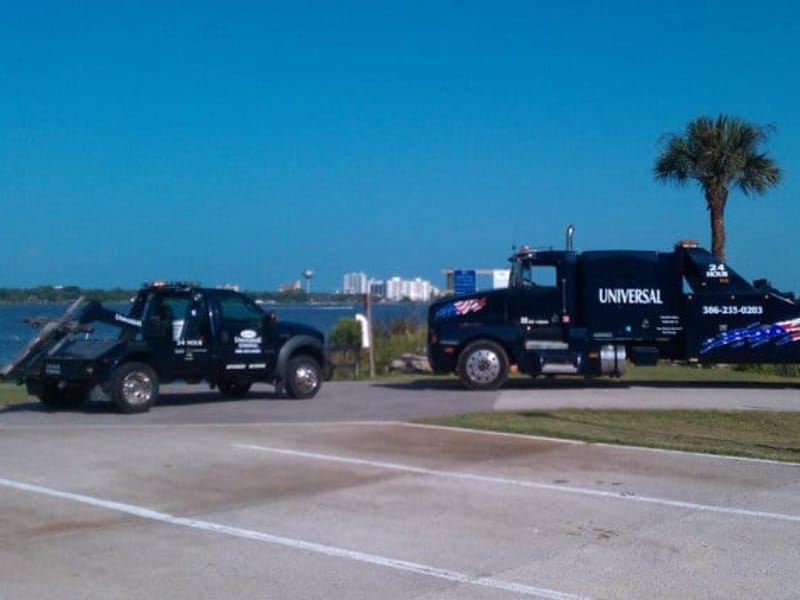
Universal Towing Handles I-95 Semi Towing After Tire Damage Turns Into Something Bigger
Universal Towing has been responding to commercial breakdowns across Central Florida for over two decades. Our fleet includes the equipment needed to move tractors, trailers, and full combinations, and our dispatchers know the questions to ask before sending a truck. Our I-95 semi towing work starts with understanding the damage, the cargo, the road position, and the destination.
When tire damage turns into brake trouble, air loss, suspension failure, or a disabled tractor, our team asks the right questions before moving anything. We work with local law enforcement, fleets, and carriers to clear the roadway safely and get the driver pointed toward the next step. I-95 semi towing after a tire failure is not just about the tire. It is about checking every system that could have been affected and making sure the truck leaves the shoulder without causing more damage.
FAQs
Can a blown semi tire damage the air system?
Yes. Shredded rubber can tear air lines, fittings, and brake components near the wheel area. If the truck cannot hold air, it should not keep moving.
When is roadside tire service not enough?
Roadside tire service may not be enough if the rim, brakes, steering, suspension, or air system is damaged. A narrow shoulder or bad road position can also make a tow the safer option.
Why does a loaded trailer change the towing plan?
A loaded trailer adds weight and affects how the rig can be moved. The cargo may also decide whether the tractor and trailer stay together or get handled separately.
What should a driver check after a tire blowout?
From a safe spot, look for hanging air lines, bent fenders, damaged rims, loose rubber, and fluid leaks. Stay out of traffic while checking.
Can driving on a blown tire make repairs more expensive?
Yes. Even a short drive on shredded rubber or a bare rim can damage the hub, brake drum, wheel end, wiring, and body panels.
What details should dispatch get after tire damage?
Dispatch needs the nearest marker, travel direction, failed tire position, trailer type, load status, visible damage, and whether the truck still has air pressure. Photos help too.