

The High Price of Standing Still
A commercial truck breaks down near Edgewater with freight still due farther up the route. The driver calls dispatch, the customer waits for an update, and Edgewater towing becomes the first step in a longer recovery plan. Even before the truck moves, the schedule has started changing.
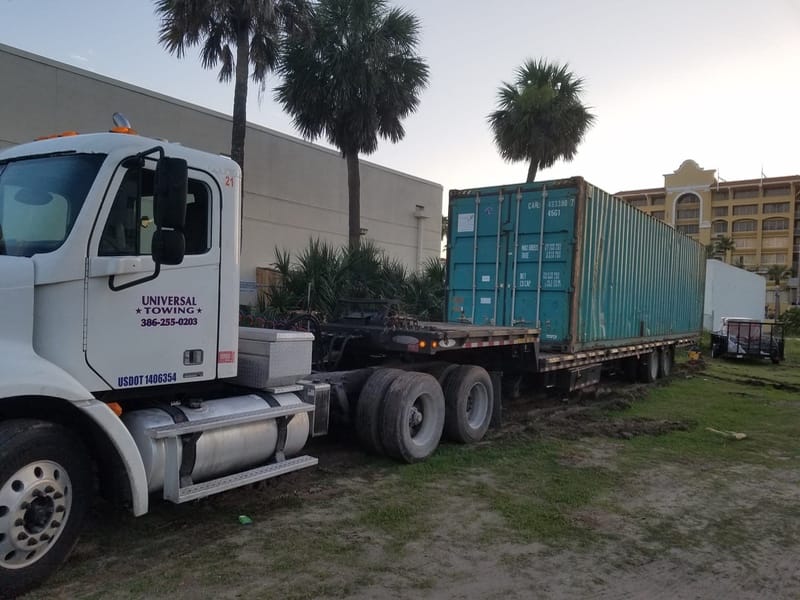
A Heavy Hit to the Schedule
The disabled vehicle may need a dealer, fleet shop, storage yard, or another tractor. The load could require transfer equipment. A delay that begins with one truck can reach a warehouse, broker, and customer before the operator arrives.
Parked Truck, Moving Expenses
Driver time continues during many roadside delays. Another unit may need to recover the trailer. A missed appointment can force the load into a later delivery slot or the next business day. The fleet may also pay for storage, extra fuel, or a hotel if the driver cannot finish the route. Dispatchers often spend hours rearranging pickups and notifying customers.
Certain loads carry more pressure. Refrigerated freight must stay within its temperature range. Utility equipment or time-sensitive parts may be needed at another job site. We have learned that the cargo schedule often matters as much as the truck problem. A delayed load can also affect the next route assigned to that trailer or driver. One breakdown can create scheduling problems that last well beyond the original repair.
The Right Information Prevents a Second Delay
We ask what kind of truck is involved, where it sits, and what damage the driver can see. Trailer size, cargo weight, locked wheels, and leaking fluids all affect the equipment choice. Photos can also help when the truck rests at an odd angle.
A clear destination saves time too. The receiving shop needs enough room, the right lifting equipment, and staff available to accept the truck. A long tow to a closed gate solves very little.
Heavy Towing Is Part of a Larger Plan
We may need to move a tractor, a trailer, or both. The fleet may prefer to send another tractor and keep the freight moving. A damaged combination unit may need to stay together until it reaches a secure yard.
Common downtime concerns include:
- Driver hours
- Trailer and cargo condition
- Shop availability
- Replacement tractor timing
- Storage needs
- Delivery changes
Every extra handoff adds time. Edgewater towing works better when dispatch settles the load plan and final destination before the unit leaves the roadside.
Florida Roads Can Complicate a Breakdown
Traffic, heat, storms, and soft roadside ground can affect Edgewater towing calls. A truck sitting on firm pavement may need a direct heavy tow. A unit beyond the shoulder can require winching before transport starts.
Our Edgewater towing crew also considers the type of freight and how far the truck is from support. A local fleet may have another tractor nearby. An out-of-state driver may depend on the towing company to help coordinate the next workable stop.
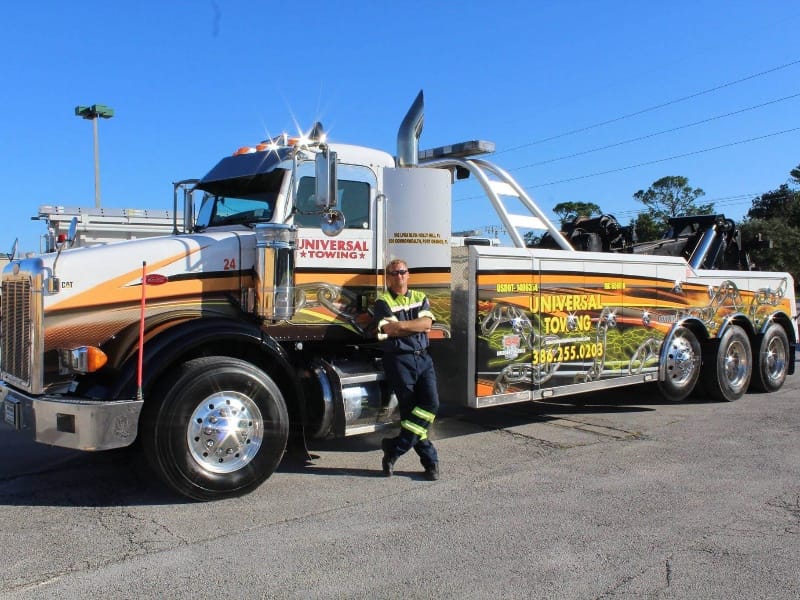
Universal Towing Handles Edgewater Towing Beyond the Basic Hook and Go
Universal Towing has served Central Florida for more than two decades. Our Edgewater towing capabilities include light, medium, and heavy-duty towing, commercial recovery, off-road retrieval, equipment transport, motorcycle towing, and custom vehicle moves.
We also work with law enforcement, fire departments, utilities, and commercial operators across the region. An Edgewater towing call may need a simple roadside move, a heavy wrecker, a cargo plan, or recovery equipment for a truck below the road. The practical goal stays the same: clear the scene and help the driver or fleet reach the next workable step.
FAQs
Can a loaded commercial truck be towed without unloading the freight?
Often, yes. The operator must confirm the total weight, cargo stability, and condition of the trailer before moving it.
What happens if the repair shop cannot accept the truck?
The unit may need to go to a secure storage yard or another approved facility. Checking shop access first can prevent a second tow.
Can another tractor take the trailer after a breakdown?
Yes, if the trailer is stable and its brakes, landing gear, and connection points are usable. Damage or shifted cargo may delay the swap.
Why does a towing company ask about leaking fluids?
Leaks may signal engine, cooling, fuel, or hydraulic damage. They can also affect where the truck is loaded and transported.
Can roadside service prevent a heavy tow?
Sometimes. Minor tire, battery, air-line, and fuel issues may be fixed where the truck sits. Major steering, axle, brake, or engine failures usually require transport.
What photos should a driver send to dispatch?
Send wide photos of the truck, trailer, road position, and nearby obstacles. Add close shots of damaged wheels, axles, leaks, or shifted cargo.